
The PATH program brings together expertise across the Can Ruti Campus to drive progress in advanced therapies
The event gathers research groups, clinical professionals and companies to share expertise and address the challenges of manufacturing, regulation and clinical application of these therapies.
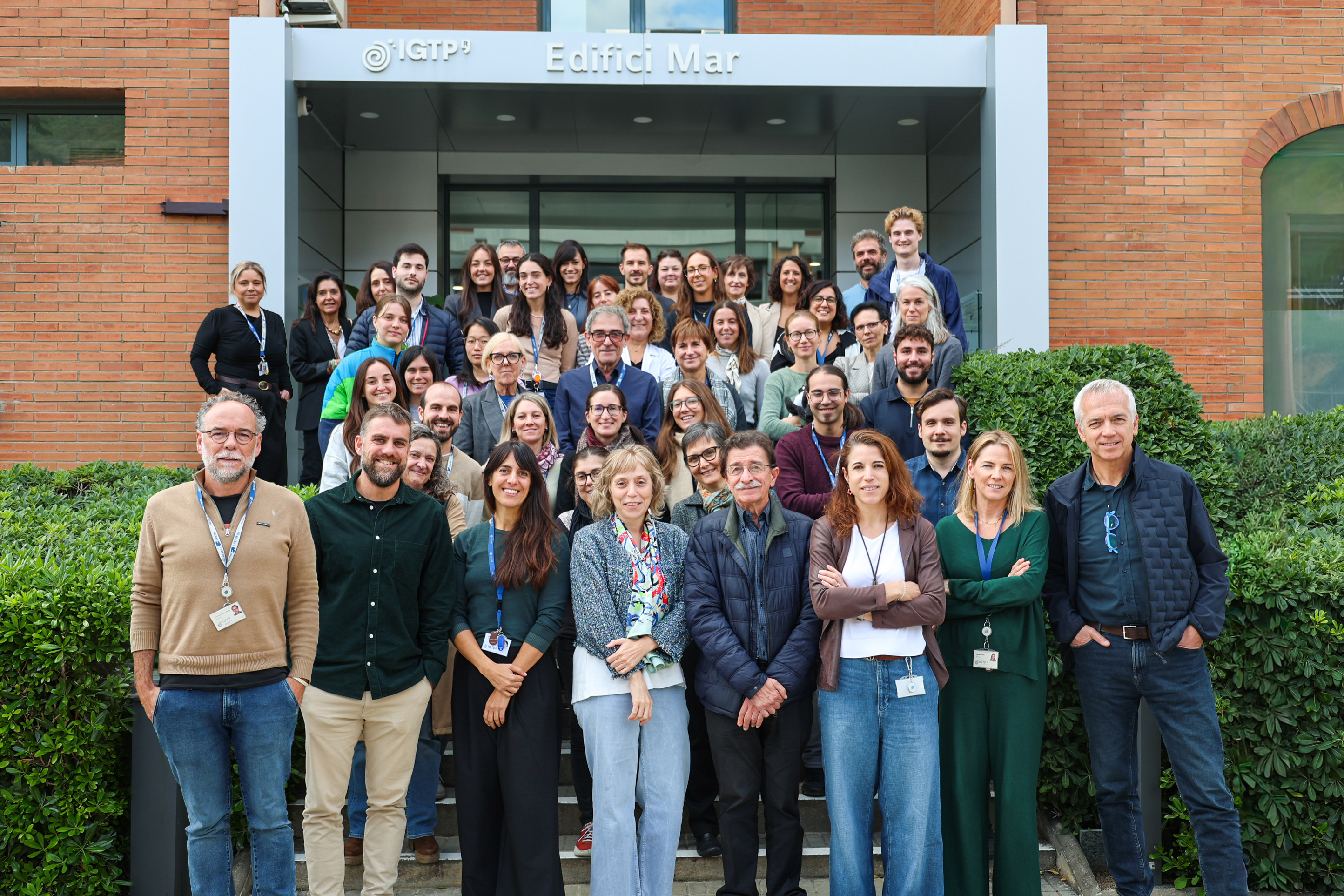
The Program of Advanced Therapies (PATH) of the Germans Trias i Pujol Research Institute (IGTP) held an event on 5 November to bring together expertise and capabilities in this field across the Can Ruti Campus and foster collaboration between research groups, clinical professionals and companies. The meeting provided an opportunity to showcase the participating research groups' capabilities, identify opportunities for collaboration and address the main challenges involved in bringing these therapies into clinical practice.
The event took place at IGTP and the Germans Trias i Pujol University Hospital (HUGTiP), with a program divided into two parts: the first aimed at encouraging mutual understanding and collaboration among the groups involved in PATH, and the second focusing on the development, production, regulation and clinical application of advanced therapies.
Connecting research capabilities across the Can Ruti Campus
The morning session began with an institutional welcome and a presentation of the program's strategic objectives by its co-directors, Joan Vidal, Director of Education at Institut Guttmann, and Carolina Gálvez-Montón, researcher in IGTP's Heart Failure and Cardiac Regeneration (ICREC) research group. The session also addressed participation in the CERTERA Consortium, a national initiative aimed at advancing the development of advanced therapies.
The participating groups then gave brief presentations of their research areas, scientific and technological capabilities, platforms and potential areas for collaboration. The session was moderated by Marcel·la Franquesa, leader of IGTP's Experimental Nephrology and Cell-Based Therapies (ENACT) research group.
The first part of the event concluded with a discussion and networking session to identify shared needs, common challenges and opportunities for collaboration, moderated by Carolina Gálvez-Montón and Elisabeth Castellanos, co-leader of the Clinical Genomics Unit (UGC) at HUGTiP and IGTP.
Challenges and opportunities in advanced therapies
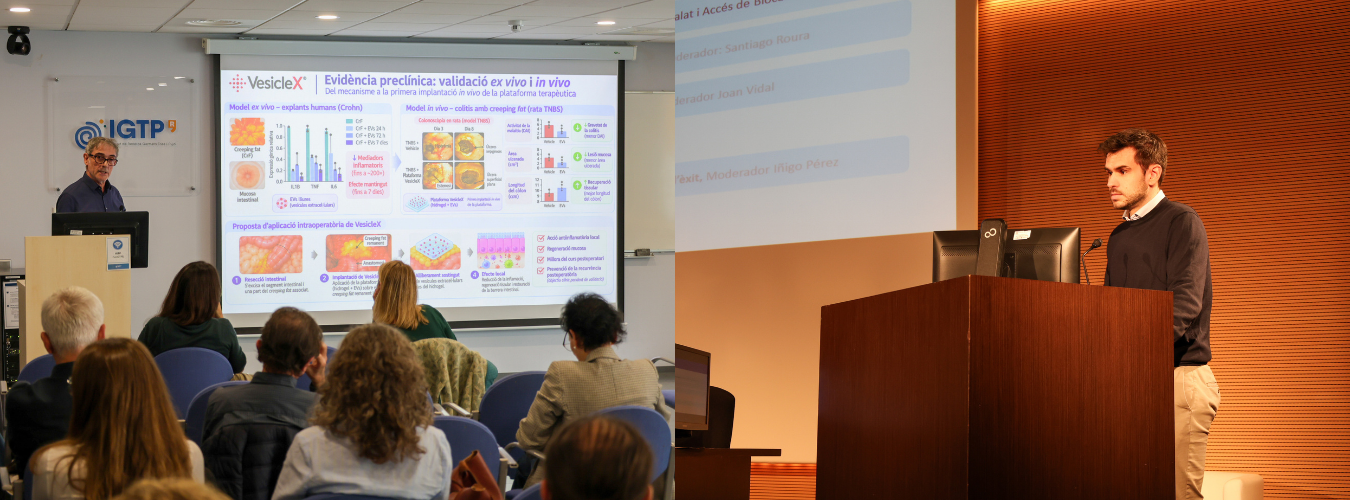
The afternoon session began with an opening presentation by Miquel Salas, director of Scale-up and Access at Biocat, and was structured into three blocks covering the different stages of advanced therapy medicinal product development, with contributions from professionals working in research institutions, healthcare organisations and specialised companies. The first block, moderated by Santiago Roura, a researcher in IGTP's ICREC group, focused on manufacturing, scale-up and production processes under Good Manufacturing Practice (GMP) standards, which are essential for translating research findings into treatments for patients. Speakers included Clara Boces (Cellab), Cristina Prat-Vidal (Banc de Sang i Teixits, BST), Lucia Gómez (Thermo Fisher Scientific) and Genís Espanyol (Aplitech Biolab).
The second block, moderated by Joan Vidal, addressed regulation, innovation and technology transfer, with particular attention to clinical development requirements, intellectual property and project support services. Participants included Rossana García (Advanthera), Josep Maria Torras (IGTP Innovation Unit) and Marc Jordan (Archivel Farma).
The final block focused on clinical translation, bringing together experiences of moving from preclinical research to human use, manufacturing for clinical application, and cell therapies for spinal cord injuries and autoimmune diseases. Moderated by Iñigo Pérez from Institut Guttmann, the session featured Paloma Gastelurrutia (iCor and IGTP), Joan Vidal (Institut Guttmann), Núria Gavaldà (BST) and Eva Martínez-Cáceres (HUGTiP and IGTP).
The event concluded with closing remarks from the PATH leadership and Julia García-Prado, scientific director of IGTP, focusing on the meeting's conclusions and the program's next initiatives.
"This event marks the starting point for gaining a better understanding of the capabilities and needs of the Can Ruti Campus in the field of advanced therapies, identifying synergies and beginning to develop joint initiatives. Developing an advanced therapy requires consideration of aspects such as manufacturing, regulatory requirements and clinical trials from the earliest stages of research. It is therefore essential to connect the professionals involved at each of these stages and help translate scientific advances into new therapeutic opportunities for patients", says Carolina Gálvez-Montón, scientific director of PATH.
The PATH program
The Program of Advanced Therapies (PATH) is one of IGTP's cross-cutting programs, alongside CARE, focused on cancer research, and CORE, focused on public health and primary care. Launched in May 2026, it aims to bring together the research, innovation and clinical development capabilities in advanced therapies of the institutions that form part of the Instituto de Investigación Sanitaria (IIS) IGTP.
Advanced therapies include treatments based on gene therapy, cell therapy and tissue engineering. PATH currently brings together around twenty research groups and several technological units across the Can Ruti Campus. The program promotes multidisciplinary collaboration, the development of joint projects and the consolidation of specialised resources and infrastructure to advance the development of new therapeutic options.