IGTP launches the PATH program to strengthen advanced therapies at the Can Ruti Campus
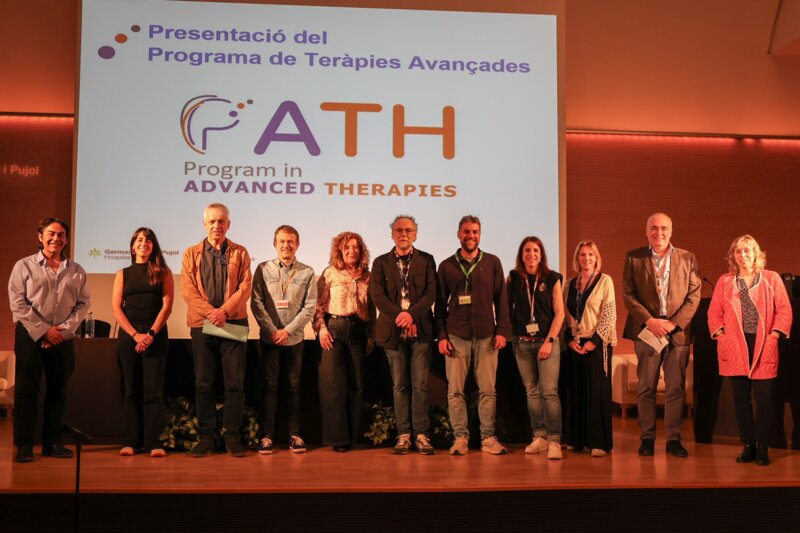
The Germans Trias i Pujol Research Institute (IGTP) has presented the PATH Advanced Therapies Program (Program of Advanced Therapies) at an event held on 14 May in the auditorium of Hospital Germans Trias i Pujol.
The PATH program, promoted by IGTP and co-directed by Joan Vidal (Institut Guttmann) and Carolina Gálvez-Montón (IGTP), also includes a coordinating group formed by Santi Roura, Marcel·la Franquesa, Iñigo Pérez and Elisabeth Castellanos. The program was created with the aim of structuring and strengthening the development and transfer of advanced therapies into clinical practice.
In this context, PATH contributes to organising research capacities within an institutional strategy based on transversal programs, in the framework of the alliance of ten centres that make up the Germans Trias Health Research Institute (IIS IGTP), accredited by the Instituto de Salud Carlos III (ISCIII), with IGTP acting as the coordinating institution at the Can Ruti Campus.
The initiative is part of the institute's strategic positioning in this field, through participation in the national CERTERA network (ISCIII) and its incorporation into the Advanced Therapies Hub of Catalonia, with the aim of consolidating the Can Ruti Campus as a leading environment in this area.
The PATH program has four main objectives:
- To promote translational research in ATMPs through projects integrating basic and applied knowledge
- To develop and consolidate technological platforms and resources to ensure production and validation under quality standards
- To foster multidisciplinary collaboration with academic, clinical and business institutions
- To promote specialised training and dissemination in advanced therapies
Advanced therapy medicinal products (ATMPs) comprise a set of innovative treatments based on gene therapy, cell therapy and tissue engineering, aimed at repairing, replacing or regenerating body functions in a wide range of diseases. In this context, the Can Ruti Campus has an ecosystem with relevant capabilities in advanced therapies in both preclinical and clinical phases, as well as specialised support units and infrastructures.
The program has currently identified around twenty research groups and several support units across the campus, strengthening the connection between research, innovation and clinical application.
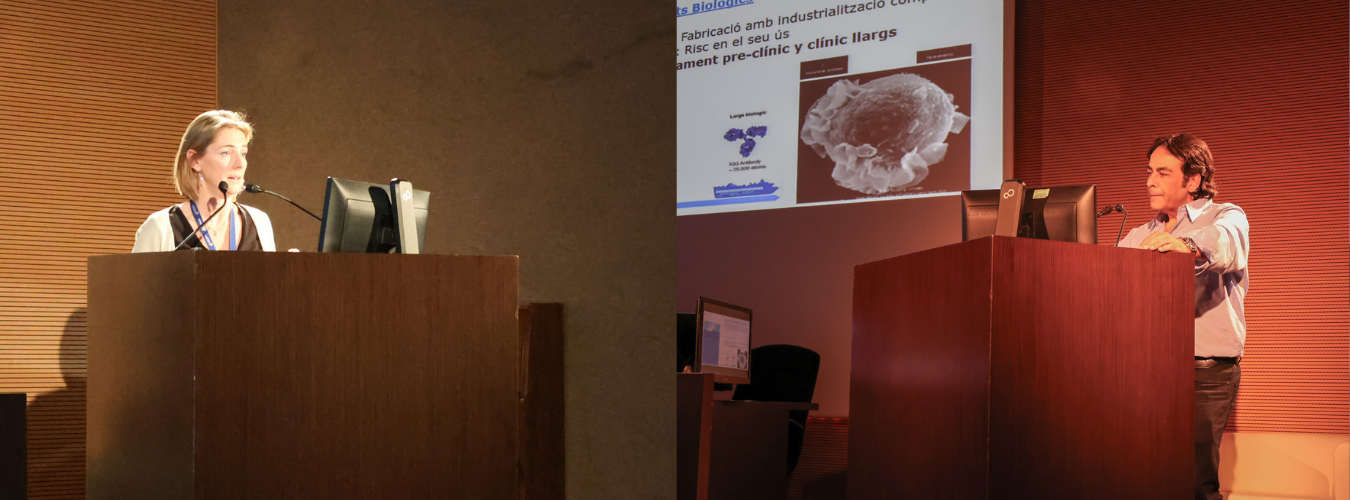
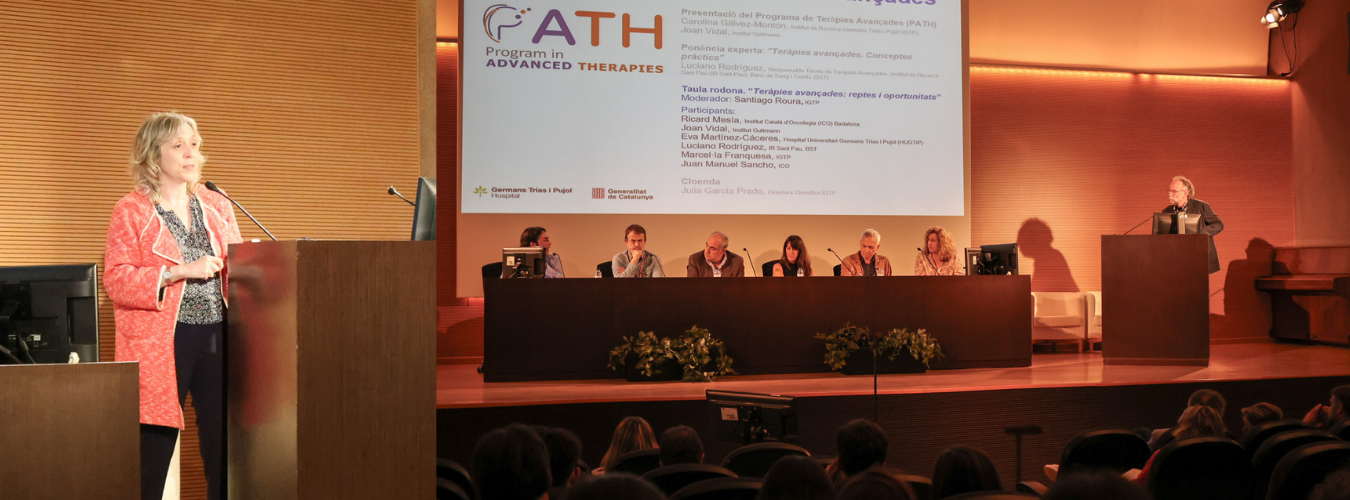
The event included the presentation of the program, a keynote lecture by Luciano Rodríguez (Sant Pau Research Institute), and a round table discussion with representatives from IGTP, ICO, Institut Guttmann, Hospital Germans Trias i Pujol (HUGTiP) and IR Sant Pau, addressing the main challenges and opportunities in the development of advanced therapies.
Participants included Santi Roura (IGTP), Ricard Mesía and Juan Manuel Sancho (ICO), Joan Vidal (Institut Guttmann), Eva Martínez-Cáceres (HUGTiP), Luciano Rodríguez (IRSant Pau) and Marcel·la Franquesa (IGTP), highlighting the need for a coordinated approach to advance the development and implementation of advanced therapies.
The session concluded with closing remarks by IGTP Scientific Director Júlia García Prado.
Strengthening IIS IGTP transversal programs
The launch of PATH is part of IGTP's transversal programs strategy, aimed at strengthening collaboration and research impact. In this context, PATH aligns with initiatives such as CORE, focused on population research from the perspective of public health and primary care, and CARE, focused on clinical and healthcare cancer research. Together, these programs contribute to strengthening an integrated research model connecting basic, translational and clinical research across the alliance of ten centres that form the IIS IGTP at the Can Ruti Campus.
According to IGTP Scientific Director García Prado, "together with the other programs, PATH contributes to structuring translational and clinical research capacities more efficiently, generating multidisciplinary collaborative environments that facilitate knowledge transfer. It is a clear commitment to strengthening translational research and its impact on health".
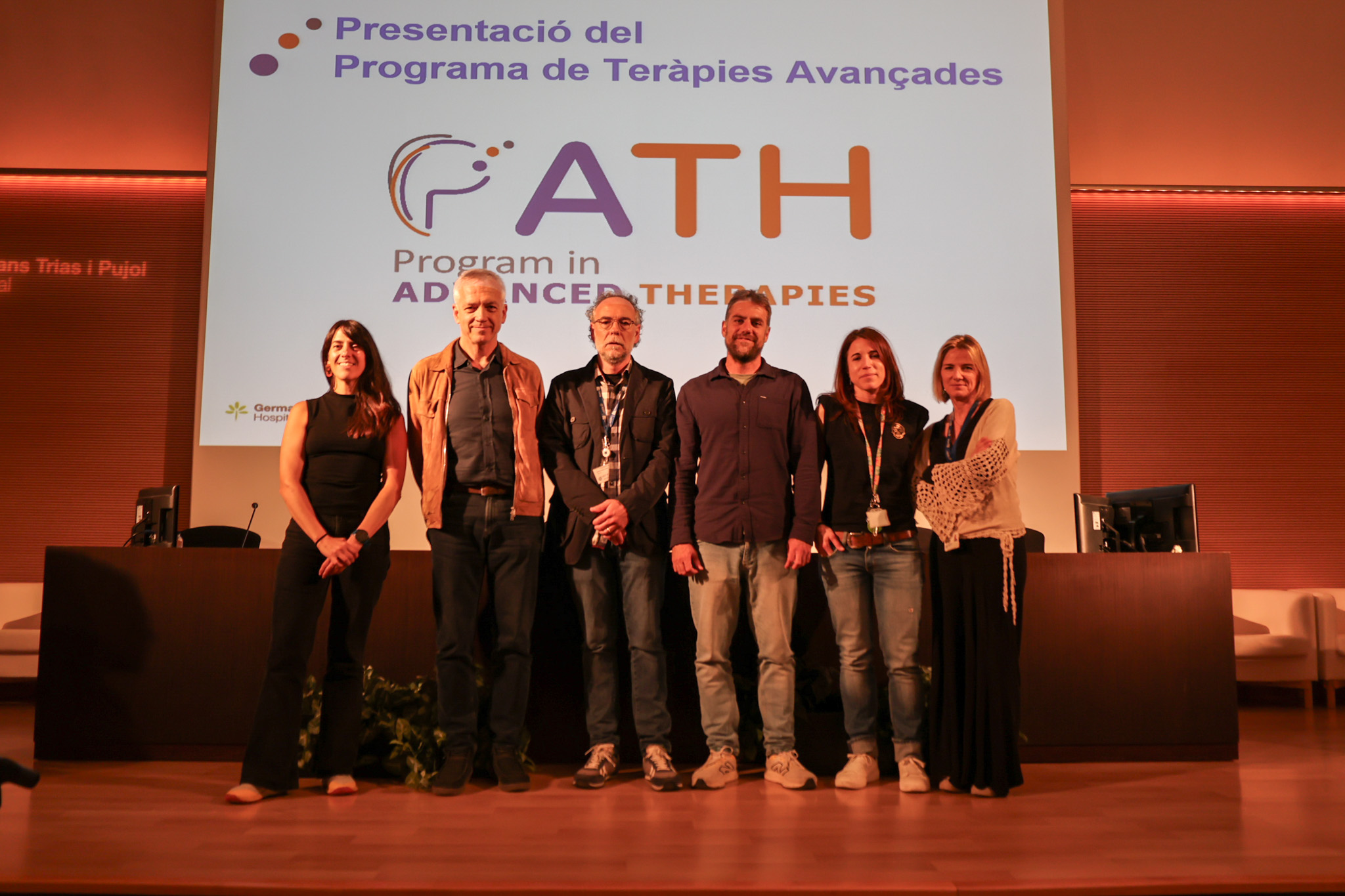
PATH coordinating group